
Blog
Beri Ka Shehad: Taste, Uses, Purity Tests & Price in Pakistan

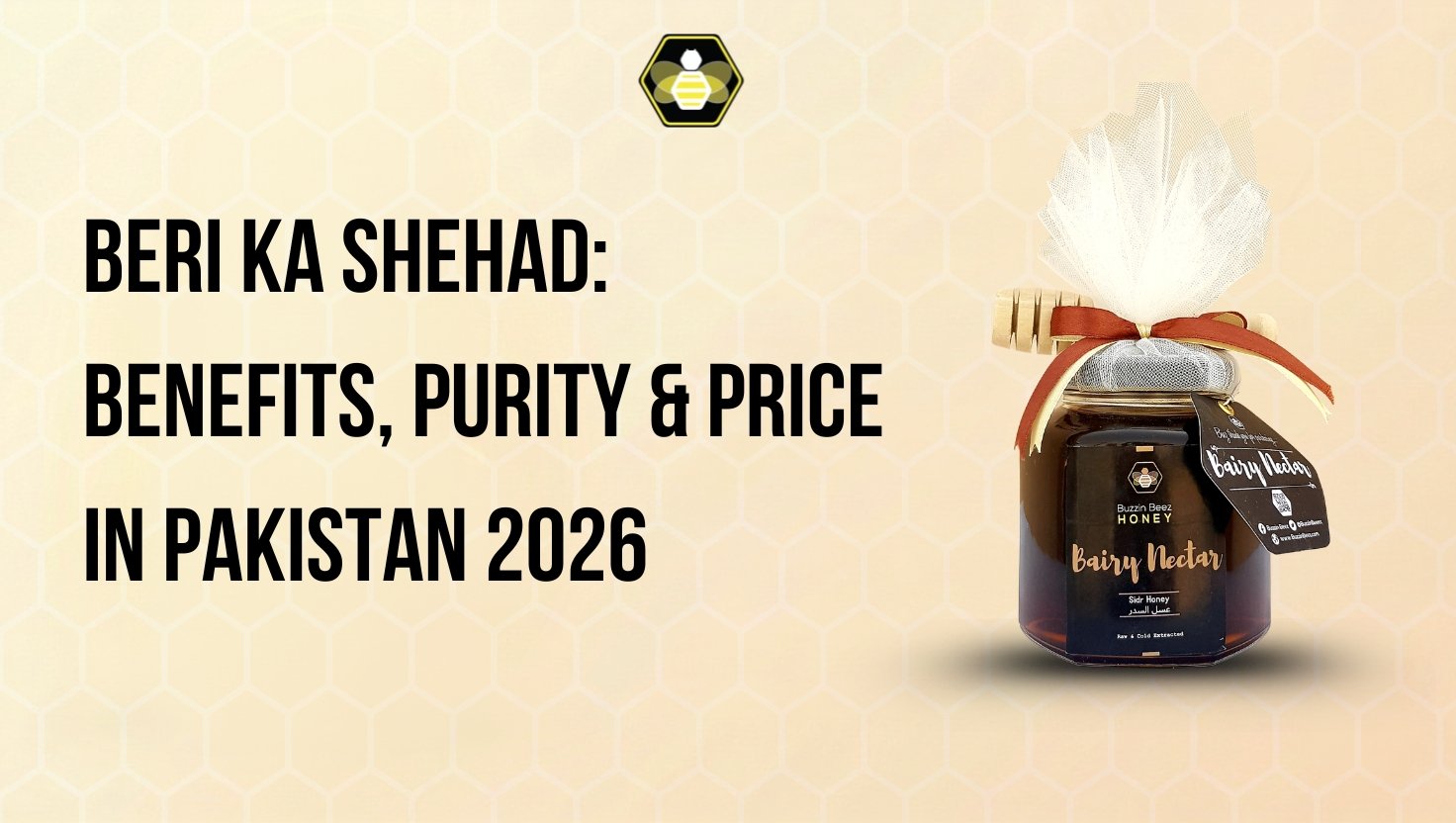
If someone asks you to name the most valued honey in the world, the answer is almost always the same: beri ka shehad. Known internationally as Sidr honey and locally as Bairy honey, this golden treasure comes from the nectar of wild Beri trees (Ziziphus) that grow across the mountains and valleys of Pakistan.
But despite its legendary status, most Pakistanis still have questions. What exactly makes beri ka shehad different from regular honey? Why does it cost significantly more? How can you tell if the jar you bought is genuine? And what role does the Beri tree play in Islam?
This guide answers every one of those questions. By the end, you’ll understand where beri ka shehad comes from, how to use it, how to test for purity, and what genuine Bairy honey should cost in Pakistan in 2026.
What Is Beri Ka Shehad? The Bairy, Ber, and Sidr Naming Confusion Explained
One of the biggest sources of confusion about this honey is its name. People search for “beri ka shehad,” “berry ka shahad,” “Sidr honey,” and “Bairy Nectar,” thinking these might be different products. In reality, they all refer to the same thing.
The tree itself goes by several names. In Urdu and Sindhi, it’s called the Beri or Bairy tree (بیری کا درخت). In Arabic, it’s known as the Sidr tree. The scientific name is Ziziphus spina-christi. Across Pakistan, you’ll hear people call it Ber, Beri, Bairy, or simply the jujube tree depending on their region.
When bees feed exclusively on the nectar of these wild Beri trees during the short flowering season (typically once or twice a year), the resulting honey has a distinctive, rich, dark amber colour, a thick texture, and a deep, caramel-like flavour that sets it apart from every other honey variety.
So whether you see “beri ka shehad,” “Sidr honey,” or “Bairy Nectar” on the label, you’re looking at the same premium honey. The key question isn’t the name. The question is whether the honey inside the jar is actually genuine.
The Beri Tree in the Quran and Sunnah
For Muslim families in Pakistan, beri ka shehad carries special significance. The Beri tree (Sidr) holds a deeply honoured position in Islamic tradition.
The Quran mentions the Sidr tree in multiple places. In Surah Al-Waqi’ah (56:28-29), Allah describes the companions of the right hand as being among “thornless lote trees” (Sidra), surrounded by abundance in Jannah. In Surah An-Najm (53:14-16), the Sidrat al-Muntaha (the Lote Tree of the Utmost Boundary) marks the highest point in the heavens, beyond which even Jibreel (AS) could not pass during the Prophet Muhammad’s (PBUH) Miraj journey.
The Sunnah also mentions Sidr. Narrations describe using Sidr leaves for ghusl (ritual washing), and the tree has been respected by scholars for centuries.
Because the Beri tree itself holds this sacred status, the honey produced from its nectar carries special meaning for Pakistani Muslim families.
7 Reasons Families Love Beri Ka Shehad
Sidr honey is one of the most prized honeys in the world. Here is what makes it special:
A Rich, Unmistakable Flavour
Beri ka shehad is dark amber with a deep, caramel-like taste and a long, warm finish. A daily spoonful of Bairy Nectar is the simplest way to enjoy it.
A Winter Favourite
In many Pakistani homes, a spoonful of beri ka shehad in warm water with lemon is a classic winter drink, passed down through generations.
Its thick texture also makes it lovely stirred into warm milk at night. For a comparison of our varieties, see our complete guide to different types of honey.
Natural Energy
The natural sugars in beri ka shehad, primarily fructose and glucose, are a quick source of energy, which is why many people enjoy a spoonful at breakfast or in the afternoon.
A Prized Gift
Because it is rare and comes from a tree honoured in Islamic tradition, a jar of beri ka shehad is a traditional gift at weddings, Eid and family visits.
Raw and Unheated
Cold-extracted beri honey keeps its natural enzymes and pollen. It is thick and slow-pouring, a sign of low moisture.
Wonderful in the Kitchen
Drizzle it over paratha, kheer or fresh fruit, or use it to glaze grilled meat. Its depth of flavour stands up to strong spices.
Honey with Nuts and Dry Fruit
Traditionally, beri ka shehad is mixed with almonds, walnuts and dry fruit to make a rich, energy-dense winter treat.
Beri Ka Shehad vs Sidr vs Acacia: What’s the Difference?
This comparison often confuses buyers, so let’s clear it up with a simple table:
| Feature | Beri / Sidr Honey (Bairy) | Acacia Honey (Palosa) |
| Tree Source | Wild Beri/Sidr tree (Ziziphus) | Acacia tree (Babool/Palosa) |
| Colour | Dark amber, rich golden | Light golden, pale |
| Texture | Thick, dense, slow-flowing | Thin, liquid, slow to crystallise |
| Taste | Deep, caramel-like, complex | Mild, floral, gentle |
| Harvest Frequency | Once or twice a year (limited) | Multiple harvests per season |
| Price Range | ₨ 4,000 to ₨ 8,000/kg | ₨ 1,800 to ₨ 3,500/kg |
| Best For | Rich flavour, gifting, special occasions | Daily use, children, mild sweetener |
The key takeaway: beri ka shehad and Sidr honey are the same thing. Acacia (Palosa) honey comes from a completely different tree and tastes lighter. Both are genuine and valuable, but they sit at different price points because of harvest rarity. You can explore the full BuzzinBeez honey range to see how each variety compares.
How to Identify Genuine Beri Ka Shehad: 5 Purity Tests
Because Sidr honey commands premium prices, it’s one of the most commonly adulterated honeys in the market. Here are five ways to spot the real thing:
Test 1: The Water Test. Drop a teaspoon of honey into room-temperature water without stirring. Genuine beri ka shehad sinks and holds its shape at the bottom. Adulterated honey dissolves or disperses quickly.
Test 2: The Texture Check. Real Sidr honey feels thick and dense on your spoon. It flows slowly and doesn’t drip easily. If the honey runs like syrup, it likely contains added water or sugar.
Test 3: The Aroma Test. Authentic beri ka shehad has a strong, distinctive floral aroma with caramel undertones. Fake honey often smells like plain sugar or has no fragrance at all.
Test 4: The Crystallisation Observation. Over time, genuine beri honey may crystallise slightly, though it resists crystallisation longer than most varieties due to its high fructose content. If your “Sidr honey” remains clear and liquid after many months, it has likely undergone heavy processing.
Test 5: Ask for Lab Reports. The most reliable test is a third-party lab report. Our guide to what honey lab tests check explains what a genuine report should show.
Home tests can catch obvious fakes, but sophisticated adulteration requires proper laboratory analysis.
Current Price of Beri Ka Shehad in Pakistan (2026)
Sidr honey is the most expensive honey variety in Pakistan, and legitimately so. The Beri tree flowers only once or twice a year in remote regions of Balochistan, KPK, and Sindh. Limited supply combined with high demand naturally drives the price upward.
Here’s what genuine beri ka shehad should cost in Pakistan right now:
| Size | BuzzinBeez Bairy Nectar Price | Market Average |
| 150g | ₨ 799 | – |
| 250g | ₨ 1,259 | ₨ 1,200 to ₨ 2,500 |
| 500g | ₨ 2,250 | ₨ 2,500 to ₨ 4,000 |
If you find “Sidr honey” or “beri ka shehad” selling below ₨ 3,000 per kg, approach with extreme caution. That price rarely covers the cost of genuine wild harvest, cold extraction, and proper testing.
BuzzinBeez’s Bairy Nectar sits at ₨ 2,250 for a 500 g jar (about ₨ 4,500 per kg), within the range you should expect to pay for genuine Sidr honey in Pakistan.
For a detailed comparison of all honey prices across varieties, check out our complete honey price guide for Pakistan.
How to Use Beri Ka Shehad in Your Daily Routine
Getting the most out of Bairy honey doesn’t require complicated recipes. Here are simple, practical ways to incorporate it into your daily life:
Morning spoon: Take one tablespoon of Bairy Nectar on its own or in a glass of lukewarm water. It is a simple way to start the day.
Winter drink: Mix one tablespoon of beri ka shehad with the juice of half a lemon and a pinch of black seed (kalonji) in warm water.
After exercise: A spoonful of Bairy Nectar is a quick, natural source of energy.
Bedtime milk: Stir a teaspoon of Bairy Nectar into a cup of warm milk before bed.
Cooking and desserts: Replace processed sugar with beri ka shehad in your chai, smoothies, salad dressings, and traditional Pakistani desserts. Because Sidr honey has a stronger flavour profile, you’ll need less of it compared to regular sugar or standard honey.
Face mask: Mix one tablespoon of Bairy Nectar with a teaspoon of yoghurt and apply to your face for 15 to 20 minutes. Honey draws in moisture, so skin feels softer afterwards. Patch test first.
Frequently Asked Questions About Beri Ka Shehad
Q: Is beri ka shehad and Sidr honey the same thing? Yes, absolutely. Beri, Bairy, Ber, and Sidr all refer to the same tree (Ziziphus). The honey produced from its nectar goes by all of these names depending on whether you’re using Urdu, Arabic, or regional terminology. For more, our Sidr honey guide covers its taste and traditions.
Q: Why is beri ka shehad so expensive compared to other honey? Three factors drive the price: the Beri tree flowers only once or twice a year (limited supply), the trees grow in remote, hard-to-access regions of Pakistan (higher harvesting costs), and genuine Sidr honey is extracted carefully without heat. All of this makes it significantly rarer than Acacia or Clover honey.
Q: Can I give beri honey to children? Honey of any type should not be given to children under one year of age due to the risk of infant botulism. For children above one year, beri ka shehad is safe and beneficial when given in moderate amounts (half to one teaspoon daily).
Q: How should I store Bairy, honey in Pakistan’s summer heat? Keep it in a cool, dry place away from direct sunlight. A kitchen cabinet works well. Never refrigerate honey, as cold temperatures speed up crystallisation unnecessarily. Always use a dry, clean spoon to prevent moisture contamination.
Q: Where can I buy genuine beri ka shehad in Pakistan? You can order Bairy Nectar directly from buzzinbeez.com with cash on delivery across Pakistan.
