Blog
Behind the Seal: What Honey Lab Tests Check and Why They Matter

Behind the Seal: What Honey Lab Tests Check
In Karachi and across Pakistan, more buyers are asking about lab-tested honey as they hear about widespread adulteration. Fake or diluted honey is often stretched with cheap sugar syrups or other additives. In one survey of Pakistani honeys, most samples met basic standards, but “some samples showed altered parameters, reflecting possible adulteration”. Home tests can catch obvious fakes, but only a laboratory can tell you what is really in a jar.
Why Lab-Tested Honey Matters in Pakistan
Honey adulteration is common in many markets. Unscrupulous producers stretch honey with corn syrup, cane sugar or industrial glucose. In Pakistan’s largely unregulated honey market, enforcement of purity standards can be lax. For context, India’s FSSAI now sets limits on common adulterants (for example, foreign sugars and moisture above 20%), restricts excessive heating through HMF limits, and requires testing for markers like diastase. Pakistan’s standard (PSQCA, PS:1934-2012) defines similar quality parameters on paper, but spot checks are rare.
What a Honey Lab Test Actually Checks
- Moisture: Honey above about 20% water can ferment. Low moisture is a sign of fully ripened honey.
- HMF (hydroxymethylfurfural): A compound that rises when honey is heated or stored badly. A low HMF suggests the honey was not overheated.
- Diastase activity: A natural enzyme that heat destroys. Higher diastase points to raw, unheated honey.
- Sugar profile: The balance of fructose, glucose and sucrose. Unusual results can point to added syrups.
- C4 sugar test: Detects cane and corn syrups, the most common adulterants.
- Pollen analysis (melissopalynology): Counts the pollen in a sample to confirm which flowers the bees visited, for example whether a “Sidr” honey really comes from Sidr trees.
- Residues: Some labs also screen for antibiotic or pesticide residues.
How to Read a Lab Report
A genuine certificate of analysis names the laboratory, the date, the batch or lot number and the method used for each test. Be wary of a “report” that has no lab name, no batch number, or results that look identical across every product a brand sells. If a seller says their honey is lab-tested, it is fair to ask to see the report for the batch you are buying.
How BuzzinBeez Handles Its Honey
At BuzzinBeez, we source single-origin honey directly from beekeepers we know. We use cold extraction (no pasteurisation or high heat) and minimal filtration so the honey keeps its natural aroma, pollen and enzymes. We never blend in syrups or reheat the honey, and we can tell you which region each variety comes from. If you have questions about a particular batch, contact us.
Our Honey Varieties
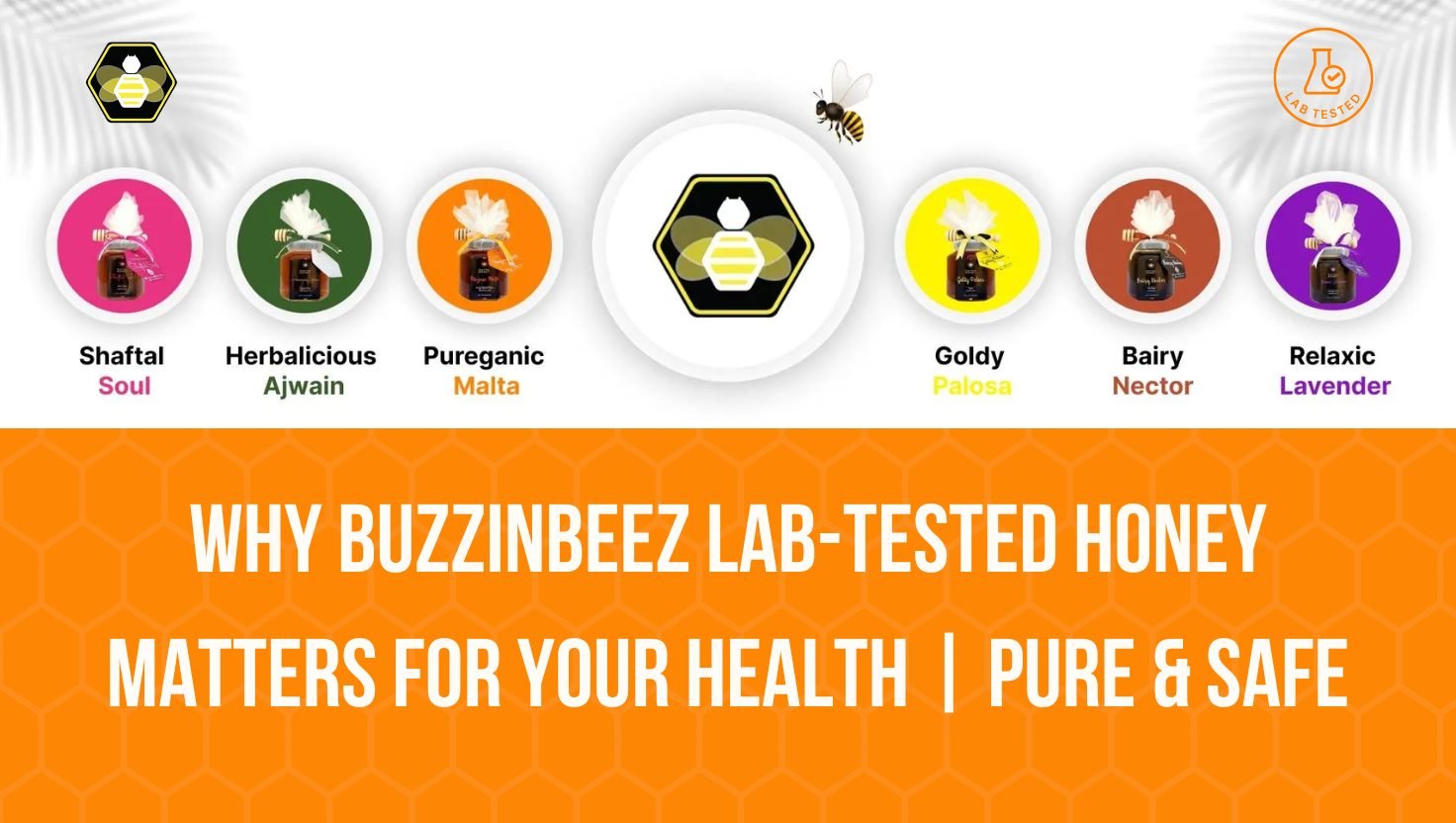
Bairy Nectar (Sidr Honey) – Deep amber Sidr honey from Karak, rich and caramel-like.
Goldy Palosa (Acacia Honey) – Pale golden palosa honey with a light, clean sweetness that is slow to crystallise.
Pureganic Malta (Orange Blossom Honey) – A bright, citrusy honey from the orange orchards of Sargodha.
Shaftal Soul (Clover Honey) – A very light clover honey with a clean, mild sweetness.
Herbalicious Ajwain (Ajwain Honey) – Light golden honey from ajwain flowers in Swat, with a mild herbal note.
Relaxic Lavender (Lavender Honey) – A rare lavender honey from Ziarat, Loralai and Jalalabad with a soft floral aroma.
Conclusion
Lab testing is the most reliable way to separate real honey from syrup. Know what the tests measure, ask for a batch report when a seller claims testing, and buy raw, single-origin honey from people who can tell you where it came from. Explore our honey.
