

Blog
What Is Sidr Powder? Beri Leaves vs Sidr Honey Explained

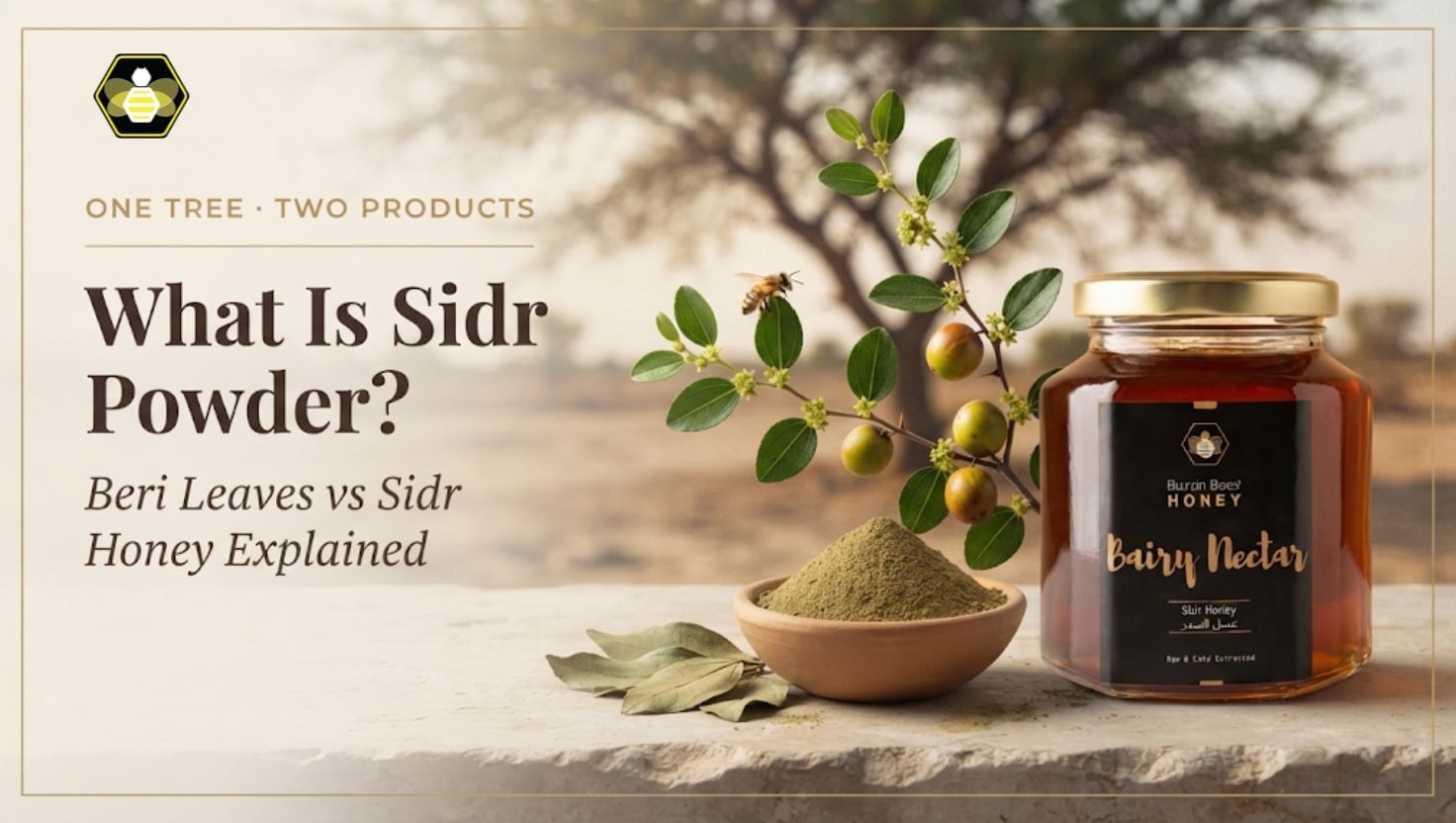
Search for anything Sidr in Pakistan, and most results talk about honey. Yet a surprising number of people are not looking for honey at all. They want to know what sidr powder is, what English speakers call Beri leaves, or whether the green powder sitting beside Sidr honey in herbal shops comes from the same tree.
It does. The Beri tree gives us leaves, fruit, flowers, and honey through bees, and each one is a completely different product with different uses. This guide explains the leaf side properly: what sidr powder actually is, what the leaves contain, how people use them, where they sit in Islamic practice, and how all of it relates to Sidr honey.
We sell the honey rather than the powder, so we have no reason to oversell either one. Where the evidence is thin, we say so.
What Is Sidr Powder?
Sidr powder is simply the dried leaves of the Sidr tree, ground fine. Traditional preparation adds nothing else.
In practice, people mix it with warm water into a paste and use it as a wash for hair and skin. That use runs back centuries across Yemen, the Arabian Peninsula and Persia, and it is among the oldest documented uses of the tree, older than the organised honey trade.
However, the name varies with the market. You will see sidr powder sold as Sidr leaf powder, Ziziphus powder, jujube leaf powder, Qasil in East African shops, and Bidara across Southeast Asia. All of these describe ground leaves from the same family of trees.
One distinction matters before anything else. The powder contains no honey, and Sidr honey contains no leaf. Bees make honey from nectar, whereas sidr powder comes from grinding the foliage. They share a tree and a name, nothing more.
Beri Leaves in English: Sidr, Jujube and Lote Tree
Beri ke pattay translate to Beri leaves or Sidr leaves in English. Retailers also sell them as jujube leaves, Ber tree leaves, or lote tree leaves.
That last name deserves a note. Lote tree is the older English rendering of Sidr, which is why translations of the Quran describe the Sidrat al-Muntaha as the Lote Tree of the Utmost Boundary. Our guide to beri ka shehad covers the tree’s place in the Quran and Sunnah in full.
For practical searching, therefore, try these in order: Sidr leaves, jujube leaves, then Ziziphus leaves. Each tends to return different sellers, since the product crosses Arabic, South Asian, and Western herbal markets under separate names.
Two Species, One Name
Here the naming gets genuinely tangled, so precision helps any buyer.
Ziziphus spina-christi, the Christ’s thorn jujube, is the Sidr of the Arabian Peninsula. It grows as a thorny evergreen tree, and its native range runs from the Levant and Sinai across Arabia to Pakistan, plus large parts of Africa. Most Yemeni and Saudi Sidr products come from this species.
Ziziphus mauritiana, the Indian jujube, is the Ber most Pakistanis know from roadsides and orchards across Punjab and Sindh. Sellers also market its ground leaves as Sidr or Qasil powder.
Importantly, both species belong to the Rhamnaceae family, and both carry saponin-rich leaves. Consequently, a jar labelled Sidr may contain either one. Neither is fake, though they are not identical, and a careful seller will tell you which species the leaves came from.
What Is Actually in the Leaves
Sidr leaves contain saponins, a class of plant compounds that produce a light lather when mixed with water. In Ziziphus spina-christi, the main group is saponin glycosides called christinins, with christinin A the most significant.
Alongside those, the leaves also carry flavonoids including quercetin, rutin and spinosin, plus tannins, cyclopeptide alkaloids and triterpenoids such as betulinic acid. Mucilage in the leaves gives the paste its slippery feel.
Saponins explain nearly everything about how the paste behaves. Soapwort, soap nuts and yucca contain them too. They lift dirt and oil gently, and they foam modestly rather than producing the dense lather of a detergent shampoo.
Being plain about the evidence matters here. Sidr powder is a mild plant wash with a very long history of use. It is not a clinically tested treatment, and claims online that it cures dandruff, eczema, hair loss, or blood sugar problems run well ahead of what research supports. Treat it as a traditional cleanser, and it will not disappoint you.
How Sidr Powder Is Used for Hair
Most people who buy sidr powder use it as a hair wash, and fortunately the method is simple.
Mix it into a paste. Stir two to three tablespoons into warm water until you have a loose, smooth paste. Add the water gradually so it does not clump.
Let it stand. Leave the paste for around ten minutes. The saponins disperse, and the texture settles.
Work it through damp hair. Massage it into the scalp and along the lengths, then leave it for a few minutes more.
Rinse thoroughly. Sidr powder grips hair more than liquid shampoo does, so rinse longer than feels necessary.
Follow with an oil. Sidr cleans gently while conditioning very little, which is why many people finish with an oil. Buzzin e Zaitoon works well here, and our guide to olive oil for summer skin and hair covers the method.
Expectations matter here as well. It lathers lightly, cleans without stripping, and leaves hair feeling different from detergent shampoo. People switching from commercial shampoo often need several washes before judging it.
Sidr Leaves in Islamic Practice
Sidr holds a particular place in Islamic tradition, and the leaves specifically appear in practice rather than just in scripture.
Hadith literature documents the use of Sidr, and Islamic funeral washing still adds Sidr leaves to the water used for the ghusl of the deceased. Across Pakistan, families preparing for a janazah commonly source dried Sidr leaves for this purpose, which is one reason the leaves stay easy to find in herbal shops and near mosques.
That funeral use is distinct from cosmetic use of sidr powder, and distinct again from the honey. If you are sourcing leaves for ghusl, local scholars and mosque committees can advise on preparation according to your school of thought.
Sidr Fruit and Sidr Flower: The Rest of the Tree
Leaves, however, are not the whole story.
Sidr fruit is the ber, a small round drupe that ripens from green to yellowish-brown over the season. Pakistanis eat it fresh in season, and the Indian jujube in particular produces a sweet, crisp fruit sold widely at roadside stalls. Dried jujube fruit also appears in traditional medicine across Asia.
Sidr flowers are small, greenish-yellow and clustered close to the stems. Individually, they are easy to miss. Collectively, though, they carry the nectar that becomes Sidr honey, and their short flowering window explains why genuine Sidr honey stays scarce and expensive.
In short, a single Beri tree offers fruit to eat, leaves to wash with, and flowers that feed bees. Each product needs different handling, and none of them substitutes for another.
Sidr Powder vs Sidr Honey: Same Tree, Different Product
People confuse these two constantly, partly because shops stock them side by side. Nevertheless, they could hardly differ more.
| Sidr powder | Sidr honey | |
| Part of the tree | Leaves | Flower nectar, processed by bees |
| Form | Green-brown powder | Thick amber liquid |
| Main use | Washing hair and skin | Eating |
| Key compounds | Saponins, christinins, tannins | Sugars, enzymes, antioxidants |
| Taste | Bitter, not for eating as food | Rich, caramel-like |
| Typical price | Low | High, due to short bloom |
Sidr honey costs far more because bees can only work the flowers during a brief annual window, while leaves are available year-round and in abundance. That price gap says nothing about which is better. It simply reflects how each one gets made.
If it is the honey you are after, Bairy Nectar is our Sidr honey, raw and cold-extracted. For everything about the honey itself, from taste to how to judge quality, start with our main guide to Sidr honey in Pakistan.
A Caution Before You Try It
Sidr leaves carry a natural wax on their surface that helps the tree survive desert heat. That wax shares some molecular similarity with latex, and some people with a latex allergy react to Ziziphus products as well.
Fortunately, patch testing costs nothing. Apply a little paste to the inside of your forearm and wait twenty-four hours before using it on your scalp. Stop if you notice redness, itching, or swelling.
Similarly, anyone with a known skin condition should check with a dermatologist first, particularly given how freely online sellers attach medical claims to this product.
Where to Read About Sidr Honey
This page covers the leaves, powder, fruit, and flowers. Our honey pages cover the rest:
- The complete guide to the honey: Sidr honey in Pakistan
- Taste, uses and traditions: Sidr honey explained
- Naming, the Quran and the Sunnah: Beri ka shehad guide
- How Sidr compares with clover: Clover honey vs Sidr honey
- How Sidr compares with acacia and other varieties: Guide to types of honey in Pakistan
- Everyday ways to use Sidr honey: How to use Bairy Nectar
Frequently Asked Questions
What is sidr powder made of?
Sidr powder is dried Sidr leaves, ground fine, with nothing else added in traditional preparation. It usually comes from Ziziphus spina-christi or Ziziphus mauritiana.
What are Beri leaves called in English?
In English, people call Beri ke pattay Sidr leaves, jujube leaves, Ber leaves, or lote tree leaves. Botanically, the source is a Ziziphus species.
Is sidr powder the same as Sidr honey?
No. Sidr powder consists of dried leaves used to wash hair and skin. In contrast, bees make Sidr honey from the tree’s flower nectar, and people eat it as food. They share a tree and nothing else.
How do you use sidr powder on hair?
Mix two to three tablespoons with warm water into a loose paste, let it stand for ten minutes, work it through damp hair, leave it a few minutes more, then rinse thoroughly. Following with an oil helps, because sidr powder conditions very little.
Does sidr powder cure dandruff or hair loss?
No reliable clinical evidence supports that. Sidr powder is a gentle saponin-based cleanser with a long traditional history. Some people find it suits their scalp better than detergent shampoo, which is a reasonable reason to try it, but treat claims of cures with scepticism.
Why are Sidr leaves used in ghusl?
Hadith literature documents the use of Sidr, and Islamic funeral practice adds Sidr leaves to the water used for washing the deceased. Local scholars can advise on the correct preparation.
Can I eat sidr powder?
Traditional use is external. Some sellers promote internal use, but the leaves taste bitter, and nobody sells them as food. Speak to a doctor before taking any plant powder internally, especially alongside medication.
