

Blog
Olive Oil for Massage in Pakistan: Which One to Use and How

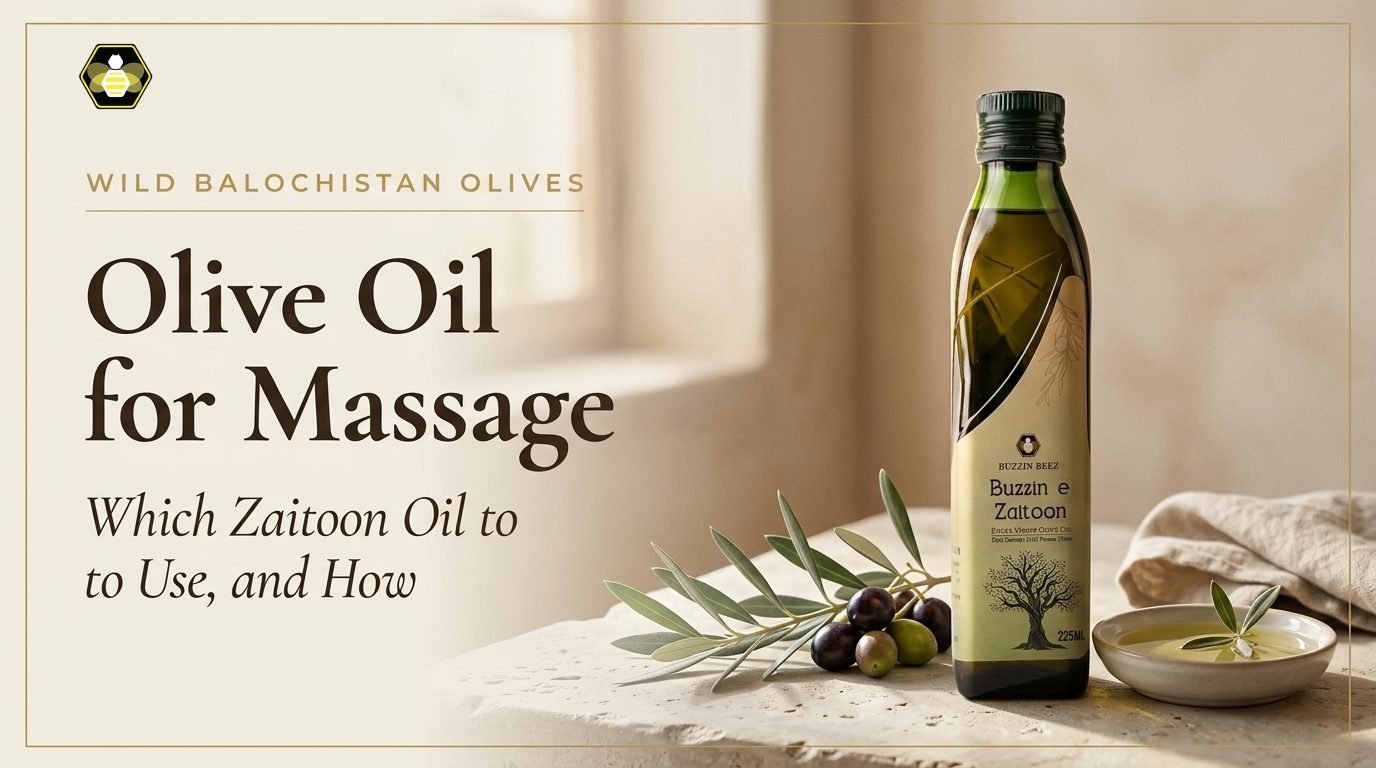
Massage runs deep in Pakistani households. Grandmothers do it, new mothers do it, and anyone with aching joints after a long day reaches for a bottle of something. Yet ask which oil to actually use, and the answers get vague fast.
Olive oil for massage is one of the most searched questions in the country, and it deserves a proper answer rather than a product pitch. This guide covers which grade of olive oil suits massage and which does not, what the oil physically does on skin, correct technique, an honest look at the baby massage question where the evidence has genuinely shifted, and what you should expect to pay in Pakistan.
We have kept beauty uses such as face masks and hair treatments out of this olive oil for massage guide, since we cover those separately and linked them near the end.
Why Olive Oil for Massage Works
Olive oil for massage works because of its fatty acid profile, not tradition.
Olive oil is roughly 55 to 83 per cent oleic acid, a monounsaturated fat with a large, slow-moving molecule. Consequently, it absorbs into skin more slowly than lighter oils. For massage, that slowness is precisely the point. A good massage medium has to provide sustained glide, so hands move smoothly without dragging, and it needs to stay on the surface long enough to finish a session rather than disappearing in two minutes.
Lighter oils such as grapeseed or sunflower absorb quickly, which suits people who dislike residue but forces you to reapply constantly. Heavier options such as mustard oil give plenty of slip yet carry a strong smell that many people find difficult indoors.
Olive oil lands usefully in the middle. It also carries squalene, a compound that occurs naturally in human sebum, so skin takes to it readily. Alongside that sit vitamin E and polyphenols.
One honest caveat, though. That same high oleic acid content, helpful for adult glide, becomes a genuine problem on infant skin. The baby section below explains why.
Which Olive Oil Is Best for Massage: Extra Virgin, Refined or Pomace
Grade matters far more than brand when you choose olive oil for massage, yet most shoppers in Pakistan never see this explained.
Extra virgin olive oil comes from the first mechanical press of fresh olives with no heat and no chemical treatment. Polyphenols, vitamin E, and squalene survive that process intact. Buzzin e Zaitoon falls in this category, pressed from wild olives (جنگلی زیتون) grown in Balochistan and harvested early.
Refined olive oil goes through heat or solvent treatment that strips defects from lower-grade oil. The result pours clear and smells of very little, and what remains is a basic lubricant.
Pomace olive oil comes from the leftover pulp and pits after pressing, extracted using chemical solvents. Plenty of cheap massage oil sold in Pakistan as “olive oil” is pomace grade. It works mechanically and costs far less, though nutritionally it delivers close to nothing.
So which olive oil is best for massage? For pure glide on a tight budget, refined or pomace does the mechanical job. Extra virgin keeps more of the olive’s natural character, colour and aroma. Given that massage oil sits on skin for extended periods, that difference is worth understanding before you buy.
Two quick label checks help. Look for the words “extra virgin” and “cold pressed” together, since either alone can mislead. Also treat suspiciously cheap “extra virgin” with caution, because genuine first-press oil cannot cost the same as solvent-extracted pomace. The same logic applies across our range, which is why our guide on spotting the real thing focuses on evidence rather than label wording.
Zaitoon Oil for Massage: What Massage Actually Does
Searches for zaitoon oil for massage and zaitoon oil ki massage ke fayde run high across Pakistan, so it is worth separating what massage does from what the oil does.
Anyone using olive oil for massage should separate the two effects. Massage itself increases local blood flow to the area worked, which is why skin flushes and warms. Furthermore, the mechanical pressure helps release muscle tension and can reduce perceived soreness after exertion. Research on massage broadly supports improvements in relaxation and sleep quality, largely through nervous system effects rather than anything absorbed through the skin.
The oil contributes something different. Its main job is reducing friction so hands glide without pulling skin, and it prevents the micro-irritation that dry massage causes. Beyond that, olive oil’s occlusive quality slows water loss from skin, which is why regular massage leaves skin feeling softer over weeks.
Being precise here matters. Olive oil applied topically does not enter the bloodstream in meaningful quantities, so claims about massage delivering nutrition internally do not hold up. What it genuinely does, moisturising and enabling comfortable massage, is worthwhile on its own without overstating it.
For joint stiffness specifically, warm oil helps mainly because warmth relaxes surrounding tissue. Gentle heating of the oil is a sound traditional practice with a straightforward physical explanation.
How to Do an Olive Oil Massage at Home
Technique shapes the results of olive oil for massage more than which bottle you buy.
Warm the oil gently. Place a small container in warm water for a few minutes. Never microwave it, since uneven heating creates hot spots that burn.
Test on your inner forearm first. Check both temperature and, for a new oil, whether your skin reacts. Wait a few hours before a full-body session.
Use less than you think. Roughly one to two tablespoons covers an adult limb. Excess oil reduces grip and leaves everything greasy afterwards.
Work toward the heart. Long strokes moving up the limbs follow venous return and lymphatic drainage. Start at the feet or hands and move inward.
Give it time to absorb. Fifteen to twenty minutes before showering allows proper absorption. Wash with lukewarm water and mild soap afterwards.
Keep it regular rather than intense. Two or three moderate sessions weekly deliver more than one aggressive session that leaves you sore.
A practical note on timing: evening sessions suit most people better. Plenty of households pair an evening massage with something warm afterwards, and Relaxic Lavender in warm milk fits that slot well. We share more ideas in our guide to using lavender honey every day.
Olive Oil for Baby Massage: What the Evidence Now Says
Here we are going to say something that runs against both tradition and our own commercial interest, because the research is detailed enough that we would rather be accurate.
Baby massage is woven deeply into Pakistani family life, and the practice itself has real value. Infant massage supports bonding, and studies associate it with better sleep and settling. None of that is in question.
The oil choice is another matter. Research from the University of Manchester found that olive oil and sunflower oil applied twice daily for 28 days impeded the development of skin barrier function in newborns compared with using no oil at all. Earlier work by Danby and colleagues, published in Pediatric Dermatology, found that topical olive oil significantly damaged the adult skin barrier and carried potential to promote or worsen atopic dermatitis.
The mechanism comes back to oleic acid. Olive oil contains upwards of 55 per cent oleic acid, whereas coconut oil holds around 5 or 6 per cent. High oleic acid content increases skin permeability, which matters little for mature adult skin but matters considerably for an infant barrier still forming.
Reflecting this, the International Association of Infant Massage now advises against oils with high oleic acid content, olive oil included, on babies’ skin. Dermatologists also caution specifically against olive oil for infants with dry or eczema-prone skin.
Our practical position: use olive oil for massage on adults with confidence, and speak to your paediatrician before using any oil on an infant, particularly one with dry or sensitive skin. Traditional practice deserves respect, though it does not override evidence when the two conflict.
Olive Oil Compared With Mustard, Coconut and Almond Oil
Olive oil for massage competes with three traditional alternatives in Pakistani households, and each has real strengths.
Mustard oil (سرسوں کا تیل) dominates traditional massage across Punjab and remains excellent for warming massage in cold weather. Its pungent smell and potential for skin irritation in sensitive users are the trade-offs.
Coconut oil absorbs faster, smells pleasant, and carries far less oleic acid, which makes it the more sensible option for infant massage. However, it solidifies below roughly 24 degrees Celsius, an inconvenience in Quetta or Murree winters, though rarely an issue in Karachi.
Almond oil is light, mild and popular for facial and infant use. It costs considerably more per millilitre and oxidises faster once opened.
Olive oil offers the longest working glide of the four. Against that, it absorbs slowly, and the baby caution above applies.
No single oil wins outright. Adult full-body massage, where sustained glide matters, suits olive oil for massage better than the alternatives. Infants do better with coconut oil, which carries a stronger evidence base. In cold weather, mustard oil keeps its warming place.
Zaitoon Oil for Massage: Price in Pakistan
Prices for olive oil for massage vary enormously in Pakistan, and understanding why protects you.
Buzzin e Zaitoon runs from ₨ 1,450 to ₨ 2,850 depending on bottle size, and you can compare sizes across our olive oil range. Cheap oils sold as massage-grade olive oil frequently sit far below that, and the gap almost always reflects grade rather than brand markup.
Extra virgin oil requires fresh olives, mechanical pressing, no heat, and no solvents, which caps yield and raises cost. Pomace extraction uses solvents on leftover pulp and delivers far more volume from the same fruit. A bottle labelled olive oil at a fraction of extra virgin pricing is almost certainly pomace or a blend, and that is not necessarily wrong if you only want lubrication.
The decision comes down to purpose. Buying purely for glide during massage means the cheaper grades work. Wanting polyphenols and vitamin E actually present in the oil means paying extra virgin prices, since refining removes them.
You can browse current sizes and pricing in the BuzzinBeez shop. One practical tip: buy smaller bottles unless you massage frequently. Extra virgin olive oil oxidises once opened, and a large bottle used slowly loses quality before you finish it.
Where to Read About Other Uses
We have kept this page on massage deliberately. Other uses have their own guides:
- Skin, hair, cracked heels and beauty applications: 7 ways to use Buzzin e Zaitoon for summer skin and hair
- Eating, cooking and Ramadan: Benefits of extra virgin olive oil for suhoor
- Buying, sizes and delivery: Buy olive oil online in Pakistan
- Pairing olive oil with our honey range: Browse all BuzzinBeez honey
Frequently Asked Questions
Which olive oil is best for massage in Pakistan?
Extra virgin, cold-pressed olive oil gives the best combination of sustained glide and natural character. Refined and pomace grades lubricate adequately at lower cost. Check for “extra virgin” and “cold pressed” together on the label.
Is olive oil good for body massage?
Yes, for adults. Olive oil suits full-body massage particularly well. Its high oleic acid content means slow absorption and a long working glide.
Can I use olive oil for baby massage?
Current evidence advises caution. Studies from the University of Manchester and Sheffield found olive oil impeded newborn skin barrier development and damaged the adult skin barrier, and the International Association of Infant Massage recommends avoiding high oleic acid oils on infants. Coconut oil is the better-supported choice. Consult your paediatrician first, especially with dry or eczema-prone skin.
Should you warm olive oil before massage?
Gently, yes. Warmth relaxes surrounding tissue and makes the oil spread more easily. Stand the container in warm water rather than microwaving it, then test on your forearm before applying.
Is zaitoon oil the same as olive oil?
Yes. Zaitoon (زیتون) is simply the Urdu and Arabic word for olive, so zaitoon oil and olive oil describe the same product. Grade still varies, so extra virgin zaitoon oil and pomace zaitoon oil are very different things.
How often should I do an olive oil massage?
Two or three olive oil massage sessions per week suit most people. Consistency matters more than intensity, and moderate regular sessions produce better results than occasional aggressive ones.
